




-
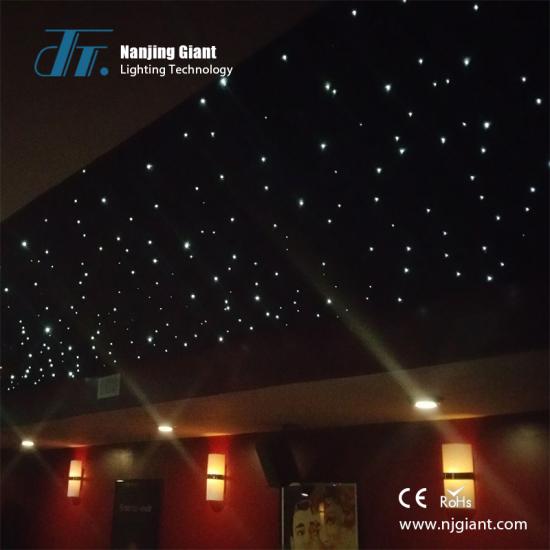 Fiber Optic Light-Honeycomb Star Ceiling Panel
 -
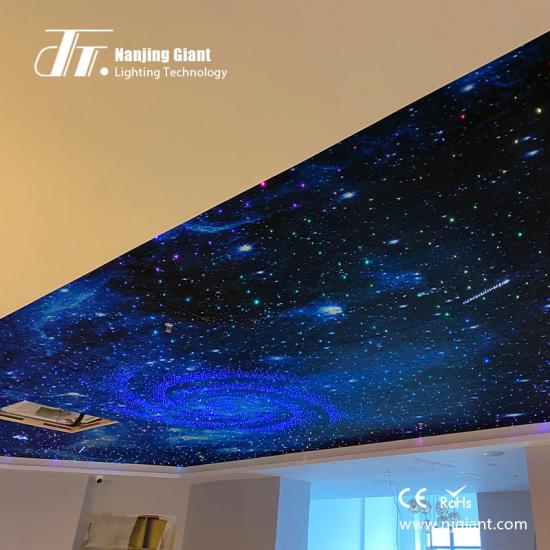 Fiber Optic Starry Sky Light-Inkjet Panel
 -
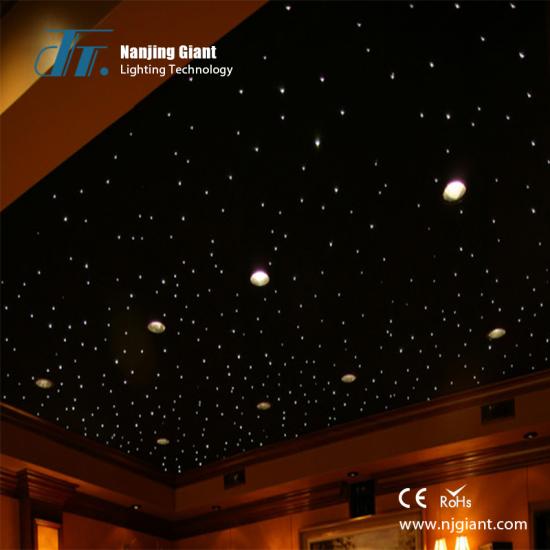 Hydra Starry Sky Ceiling Panel
 -
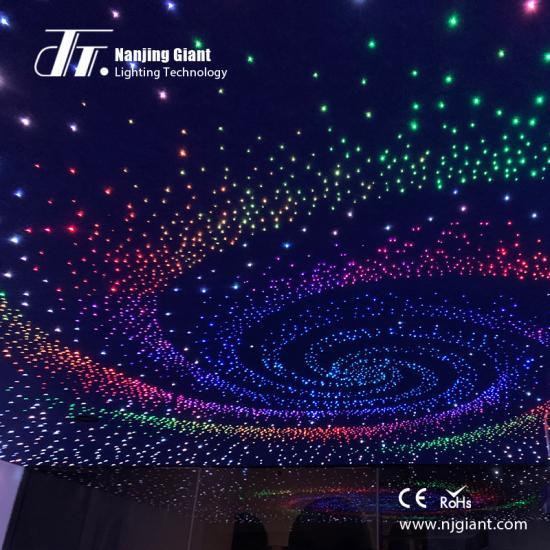 Fiber Optic Star Light Traditional Installation
 -
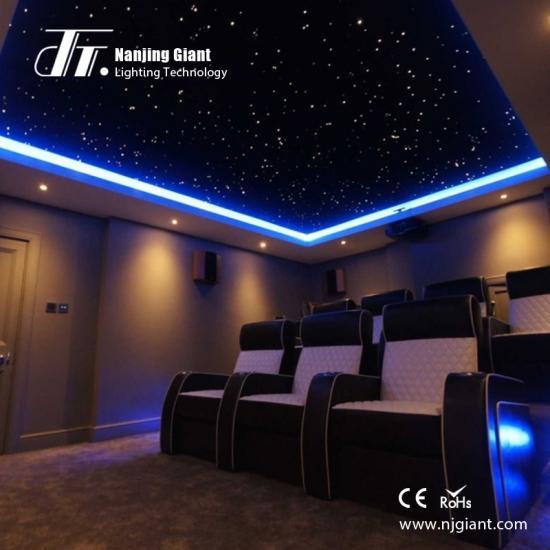 Fiber Optic Standard Starlight Ceiling Panel
 -
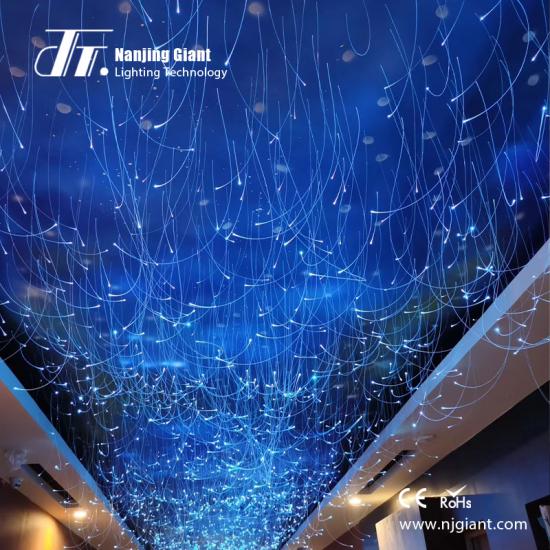 Fiber Optic Hanging Light Star Ceiling Panel
 -
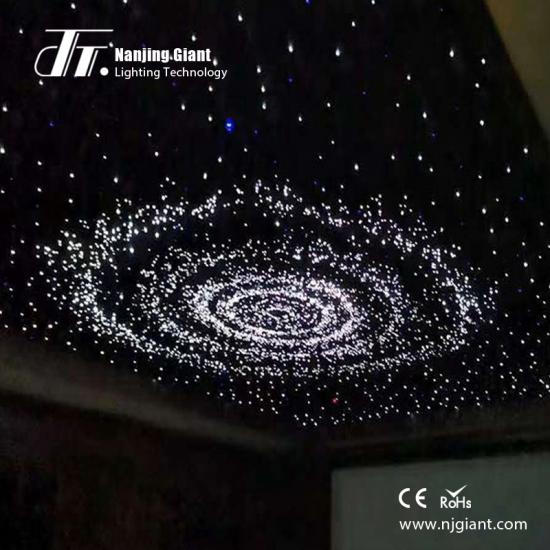 Fiber Optic Star Ceiling Custom Pattern
 -
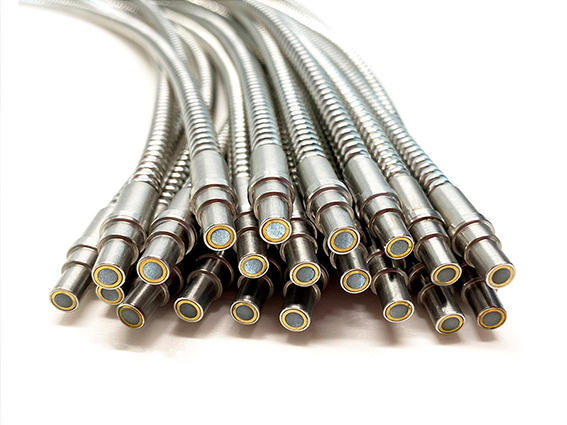
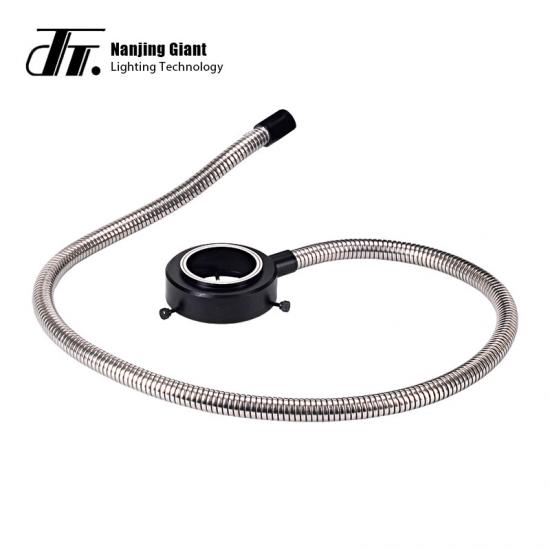 Optical Fiber Ring Light Guide
Since the light is transmitted from the lamp to the end of the optical fiber, the fiber optic illuminator can also be equipped with an eight-color glass filter disc to achieve continuous or fixed color changes. In addition, the movement of the color wheel can be computer processed to provide special effects. Such as timing changes of light or momentary light like strobing. Finally, in order to increase the power of a complex lighting device, several light engines can also be connected in a row or in series. The illuminator unit includes a light source, reflector, ultraviolet (uv) and infrared (IR) filters and a rotating glass color wheel (optional). According to the different light sources inside, it is generally divided into two types: halogen tungsten lamp series and metal halide light series. Among them, the halogen tungsten light source power is generally 50W or 75W, 100W, and the input voltage is AC 12V (the device has its own power transformer). The power of halogen light source is generally 150W or 250W, and the input voltage is AC 220V. It is suitable for places with high brightness requirements such as contour lighting and facade lighting of buildings, and is often used as fiber optic chandelier.
According to the different protection levels, light-emitting devices are generally divided into two types: indoor type and outdoor type. There are many rotating glass color discs, which can be automatically changed into eight colors. The device can be controlled by the computer according to the set program changes, and can also be controlled synchronously by the audio signal output from the audio system. Its built-in power plug is suitable for AC 220V, 50HZ.
The size of a single fiber and the required illuminance generally depend on the wattage and type of light source used. The ideal fiber optic lighting is one with a very small light-emitting area and high luminous flux output. A reflector at the rear of the light source and a light-transmitting mirror at the front help transmit the light into the fiber.
Commonly used lamps include 50W to 100W low voltage MR16 lamps and 70W to 250W metal halide (M-H) lamps.There are 3W, 5W, 8W, 16W, 27W, 45W, 75W LED fiber optic color disk light source supply. Meteor, synchronization, wireless remote control, double head and other models.
- PREV POST : Our new 16w light source machine - high brightness and small size
- NEXT POST : Light curing dental light guide rod






 IPv6 network supported